Air Conditioner Peptide Screening Laboratories Third-party Peptide Analysis
Imaginative Peptides recommends a series of different purity levels to aid you pick the ideal peptide purity for peptide-based assays and applications. The adhering to list shows the suggested peptide pureness degrees required for various peptide applications. Peptide recognition is mainly performed using mass spectrometry (MS), which provides precise dimensions of peptide molecular weight. Additionally, techniques such as amino acid analysis and HPLC are used to validate the peptide's identification and pureness, ensuring precise characterization for different applications. We give peptide identification confirmation making use of mass-based techniques selected for the sample and analytical function. This is very important when the major inquiry is whether the observed element matches the desired peptide or whether a modification has been incorporated as anticipated.In vivo tests review absorption, circulation, metabolism, and discharging (ADME) characteristics, additionally validating effectiveness and security. These screening solutions not just help customers optimize items precisely throughout development however additionally provide strong information sustain for regulative compliance of peptide formulas. Beware of COAs that offer a pureness number without any supporting chromatographic information, report purity without defining the analytical approach, or list a molecular weight without mass spectrometry confirmation. Tandem mass spectrometry (MS/MS or MS TWO) fragments the peptide ions in the gas phase and evaluations the piece masses. This is the gold standard for peptide identity-- it verifies both the structure and the sequence. For several peptide more info tasks, outright peptide quantity matters as much as chromatographic pureness.
Just How To Read An Hplc Chromatogram
Peptide Applications In Functional Foods And Health Items
Irregular particle dimension circulation and morphology can affect bioavailability and security. BOC Sciences is furnished with tools like DLS, TEM, SEM, etc, to completely evaluate nanoparticle size, circulation, and microstructure. For us, purity isn't simply a percentage-- it's a pledge of stability, uniformity, and regard for the science being done.Each peptide has actually a different anticipated molecular weight, so mass verification is not a common badge; it is compound-specific proof. For a deeper identity-focused description, see Mass Spectrometry Peptide Confirmation. Identification screening verifies that what was synthesized is really the intended sequence.
The liquified peptide example is injected right into a stream of fluid solvent (the mobile phase) that flows via a tube packed with small bits (the stationary stage). Various particles "stick" to those fragments with various strengths, so they travel with the column at different speeds. Refined differences in basic material pureness and framework can cause variances in the task of the end product.
What Do Purity Levels 95%, 98%, 99% Mean?
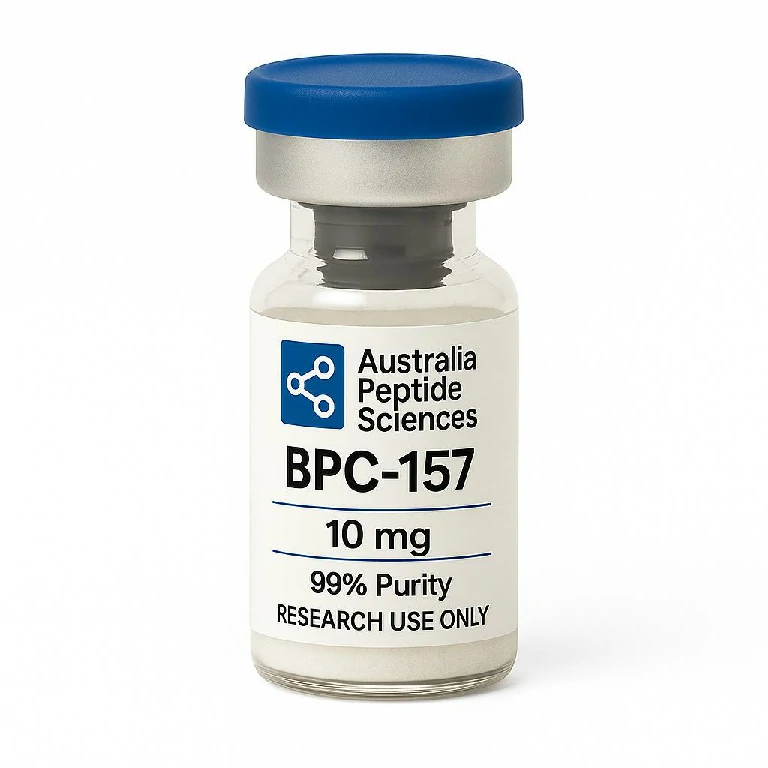
- They are labeled "for research usage only" to explain that they are planned for in vitro experiments or animal research studies, not for any kind of type of human use.For a 30-residue peptide at the exact same effectiveness, that goes down to approximately 86%.Matrix-assisted laser desorption ionization time-of-flight mass spectrometry (MALDI-TOF MS) and electrospray ionization mass spectrometry (ESI MS) are both most generally utilized techniques.If you see multiple big heights of comparable height, you're looking at either a low-purity example or a combination.Peptides are checked through a combination of strategies, consisting of HPLC for purity, mass spectrometry (MS) for sequence confirmation, and nuclear magnetic vibration (NMR) for architectural evaluation.Lots of COAs also specify well-known or "defined contaminations" versus unspecified ones, each with their private percentages if over a specific limit.